
Home-based blacksmithing is an age-old craft that has seen a resurgence in recent years, driven by a growing interest in handmade goods and self-sufficiency. This ancient art form, which dates back thousands of years, involves the forging of metal into functional and decorative items using heat and tools. The allure of blacksmithing lies not only in the creation of unique pieces but also in the satisfaction derived from working with one’s hands and mastering a skill that has been passed down through generations.
For many, it represents a return to traditional craftsmanship in an increasingly digital world. The appeal of home-based blacksmithing extends beyond mere hobbyism; it offers a pathway to creativity and self-expression. Whether one is interested in crafting tools, jewelry, or artistic sculptures, the possibilities are virtually limitless.
Moreover, the act of forging metal can be meditative, providing a sense of accomplishment and connection to history. As more individuals seek to cultivate skills that allow them to create tangible products, home-based blacksmithing stands out as a fulfilling endeavor that combines artistry with practicality.
Key Takeaways
- Home-based blacksmithing is a rewarding and practical hobby that allows individuals to create unique metalwork from the comfort of their own home.
- Setting up a home blacksmithing workshop requires careful planning and consideration of space, ventilation, and safety measures.
- Essential tools and equipment for home blacksmithing include a forge, anvil, hammer, tongs, and safety gear such as gloves and goggles.
- Safety measures for home-based blacksmithing include proper ventilation, fire safety precautions, and the use of personal protective equipment.
- Basic blacksmithing techniques for beginners include forging, shaping, and joining metal, while advanced projects can include intricate designs and complex metalwork.
Setting up a Home Blacksmithing Workshop
Choosing the Right Location
The ideal location for a blacksmithing setup is typically an outdoor area or a well-ventilated garage or shed. This is crucial because blacksmithing involves high temperatures and the potential for smoke and fumes.
Designing the Workshop Layout
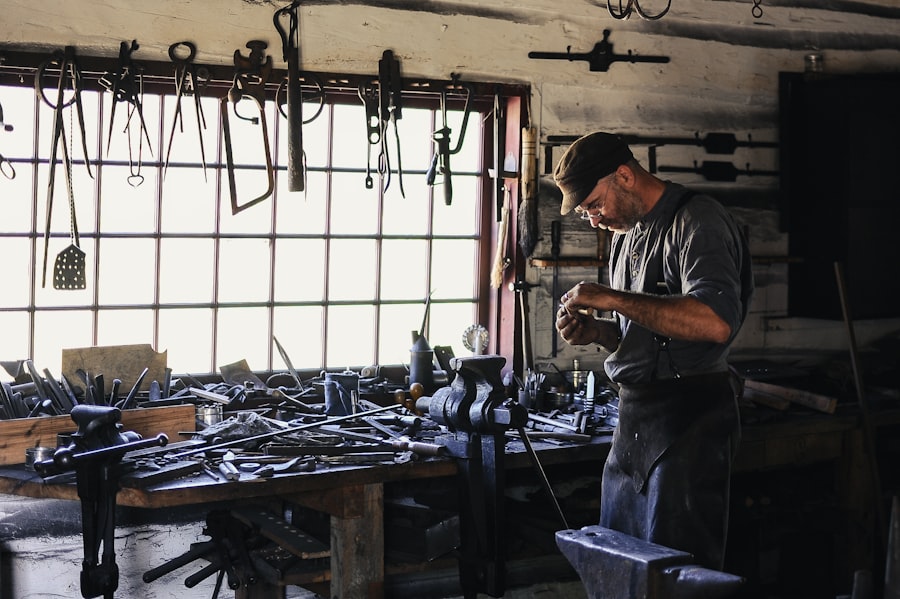
A dedicated space allows for the organization of tools and materials while minimizing the risk of fire hazards associated with working with hot metal. When designing the layout of the workshop, it is essential to consider the workflow. A typical blacksmithing process involves heating metal in a forge, shaping it on an anvil, and then cooling it in water or oil. Therefore, positioning the forge, anvil, and quenching station in close proximity can enhance efficiency.
Essential Workshop Features
Additionally, incorporating storage solutions for tools and materials will help maintain an organized workspace. Adequate lighting is also vital; bright, focused lighting can help prevent accidents and improve precision during intricate tasks.
Essential Tools and Equipment for Home Blacksmithing

The foundation of any successful blacksmithing endeavor lies in having the right tools and equipment. At the core of blacksmithing is the forge, which is used to heat metal until it becomes malleable. There are various types of forges available, including coal forges, gas forges, and electric forges.
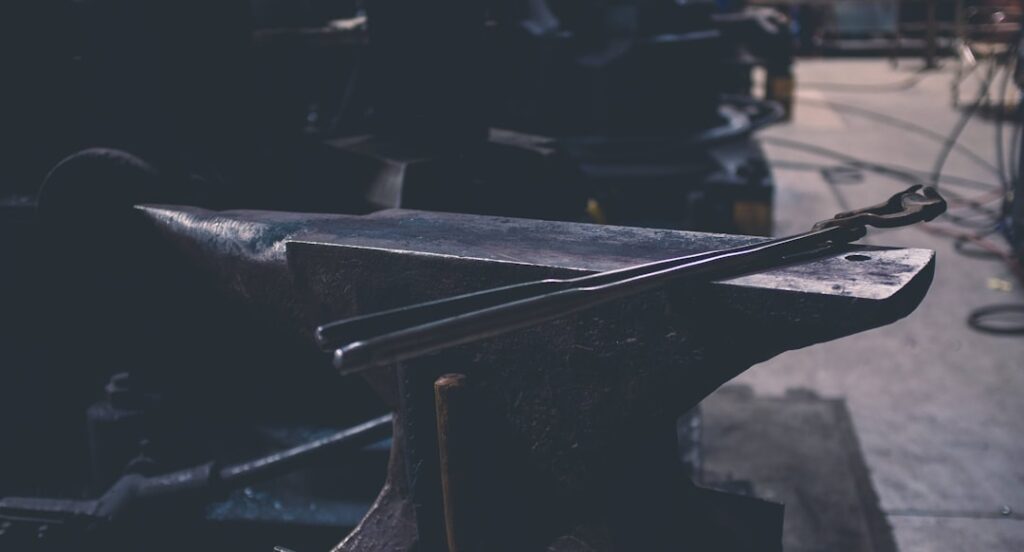
Each type has its advantages; for instance, gas forges are often favored for their ease of use and cleaner operation compared to coal forges. In addition to the forge, an anvil is another indispensable tool in a blacksmith’s arsenal. Anvils come in various shapes and sizes, but they all serve the same purpose: providing a solid surface on which to shape hot metal.
A good anvil should be heavy enough to absorb the force of hammer strikes without moving. Other essential tools include hammers (with different weights and shapes for various tasks), tongs (for gripping hot metal), chisels, and files. As one progresses in their blacksmithing journey, additional tools such as swage blocks, bending forks, and power hammers may become valuable additions to the workshop.
Safety Measures for Home-based Blacksmithing
| Safety Measure | Description |
|---|---|
| Wear Protective Gear | Always wear safety goggles, gloves, and an apron to protect yourself from sparks and hot metal. |
| Ventilation | Ensure proper ventilation in your workspace to prevent inhalation of harmful fumes and gases. |
| Fire Safety | Keep a fire extinguisher nearby and have a clear understanding of fire safety protocols. |
| Tool Maintenance | Regularly inspect and maintain your tools to prevent accidents and injuries. |
| Training | Seek proper training and education in blacksmithing techniques to work safely and effectively. |
Safety is paramount in any blacksmithing operation due to the inherent risks associated with working with high temperatures and heavy equipment. One of the first steps in ensuring safety is to wear appropriate personal protective equipment (PPE). This includes heat-resistant gloves, safety glasses or goggles to protect against flying sparks, and sturdy footwear to shield feet from falling objects or hot metal.
An apron made from leather or another heat-resistant material can also provide an extra layer of protection against burns. Proper ventilation is another critical safety measure. Blacksmithing generates smoke and fumes that can be harmful if inhaled over prolonged periods.
Ensuring that the workshop is well-ventilated can help mitigate these risks. Additionally, having a fire extinguisher readily accessible is essential; blacksmithing involves open flames and hot materials that can ignite nearby combustibles. Regularly inspecting the workspace for potential hazards—such as flammable materials or clutter—can further enhance safety.
Basic Blacksmithing Techniques for Beginners
For those new to blacksmithing, mastering basic techniques is essential before progressing to more complex projects. One fundamental technique is drawing out, which involves elongating a piece of metal by hammering it while it is heated. This technique is crucial for creating items such as hooks or handles.
Another important skill is upsetting, which entails thickening a section of metal by hammering it down on itself; this technique is often used to create rivets or decorative elements. Bending is another foundational technique that allows blacksmiths to create curves and angles in their work. By heating the metal and applying pressure at specific points, one can achieve various shapes.
Understanding these basic techniques provides a solid foundation upon which beginners can build their skills and tackle more advanced projects.
Advanced Blacksmithing Projects for Home-based Blacksmiths
Once a blacksmith has mastered the basics, they may wish to explore more advanced projects that challenge their skills and creativity. One popular advanced project is creating custom knives or blades. This requires not only proficiency in shaping metal but also knowledge of heat treatment processes that enhance the blade’s hardness and edge retention.
Crafting a knife involves several steps: forging the blade shape, grinding it to achieve sharpness, and applying heat treatment techniques such as tempering. Another advanced project could involve creating decorative ironwork such as gates or railings. This type of work often combines both functional and artistic elements, requiring a keen eye for design as well as technical skill in forging intricate patterns and shapes.
Blacksmiths may also delve into creating sculptures or artistic pieces that showcase their creativity while utilizing their technical skills. These projects not only serve as personal challenges but can also become unique items for sale or display.
Tips for Selling and Marketing Home-crafted Blacksmithing Products
For those interested in turning their blacksmithing hobby into a business venture, effective marketing strategies are essential for reaching potential customers. One approach is to establish an online presence through social media platforms such as Instagram or Facebook, where visual content can showcase finished products and behind-the-scenes processes. Engaging with followers by sharing tips, tutorials, or insights into the craft can help build a loyal customer base.
Participating in local craft fairs or artisan markets can also provide valuable exposure for home-crafted products. These events allow blacksmiths to connect directly with customers, receive feedback on their work, and network with other artisans. Additionally, creating an online store through platforms like Etsy can expand reach beyond local markets.
High-quality photographs that highlight the craftsmanship and unique features of each item are crucial for attracting buyers online.
Resources for Home-based Blacksmiths
Aspiring home-based blacksmiths have access to a wealth of resources that can aid in their learning journey. Books such as “The Complete Modern Blacksmith” by Alexander G. Weygers provide comprehensive insights into techniques and projects suitable for beginners and advanced smiths alike.
Online platforms like YouTube host numerous channels dedicated to blacksmithing tutorials, offering visual demonstrations that can enhance understanding of complex techniques. Joining local blacksmithing guilds or online forums can also provide invaluable support and community engagement. These groups often host workshops, demonstrations, and competitions that foster skill development while connecting enthusiasts with experienced mentors.
Additionally, many websites offer downloadable plans for specific projects or tools, allowing smiths to expand their repertoire while honing their craft further. In conclusion, home-based blacksmithing offers a unique blend of artistry and practicality that appeals to many individuals seeking creative outlets or entrepreneurial opportunities. By setting up a well-organized workshop equipped with essential tools while prioritizing safety measures, aspiring blacksmiths can embark on a fulfilling journey into this ancient craft.
With dedication and practice, they can progress from basic techniques to advanced projects while exploring avenues for marketing their creations effectively.
If you are interested in learning more about the art of blacksmithing from the comfort of your own home, be sure to check out the article “The Benefits of Home-based Blacksmithing” on Bluebird Forge. This article provides valuable insights into the advantages of setting up a home-based blacksmithing workshop, including the convenience of being able to practice your craft whenever you have free time and the cost savings of not having to commute to a traditional forge. It also offers tips on how to create a safe and efficient workspace in your own backyard or garage.
FAQs
What is blacksmithing?
Blacksmithing is the art of shaping and forging metal using heat and tools such as hammers and anvils. It has been practiced for centuries and is used to create a wide range of items including tools, weapons, and decorative pieces.
What is a home-based blacksmith?
A home-based blacksmith is someone who practices the art of blacksmithing from their own home or personal workshop. They typically have their own forge and tools and may create items for personal use, for sale, or as a hobby.
What equipment is needed for home-based blacksmithing?
The basic equipment needed for home-based blacksmithing includes a forge for heating the metal, an anvil for shaping the metal, and a variety of hammers, tongs, and other tools for manipulating the metal. Safety equipment such as gloves, aprons, and eye protection is also essential.
Is blacksmithing a dangerous hobby?
Blacksmithing can be a dangerous hobby due to the use of high heat and heavy tools. It is important for home-based blacksmiths to receive proper training in safety procedures and to use caution when working with hot metal and equipment.
What can be made through home-based blacksmithing?
Home-based blacksmiths can create a wide range of items including decorative pieces such as sculptures and ornaments, functional items such as tools and hardware, and even custom pieces such as knives and jewelry. The possibilities are limited only by the blacksmith’s skill and imagination.


